Journey and more

Telangana

Telangana

About Telangana

Telangana is the newly born 29th state of India, consisting of the ten north-western districts of Andhra Pradesh. It was originally part of the region comprising Hyderabad in Andhra Pradesh. With the separation, Telangana has a completely new identity, packed with rich history and culture this state is exploring its tourism strengths. The capital city of Hyderabad is shared between Telangana and Andhra Pradesh. The famous Char Minar is located here, which is also a shared monument among the two states. However, Telangana has a lot more to offer than just that. The Chowmahalla Palace, the Golkonda fort are some of the historically significant sites situated in this state.

Hyderabad

A city of contrasts, Hyderabad exudes an old-world charm of its own with the Old City (Charminar side), Hitech City (Cyberabad) and the other areas lying between the old and the new. The capital and the largest city of Telanaga, Hyderabad, is home to stately mosques and noisy bazaars lined parallelly alongside swanky new office buildings and malls, and it is these very contrasts – these glimpses into the city’s rich past with inherent promises of an even better future –that make Hyderabad a city worth visiting. Maybe even more than once.

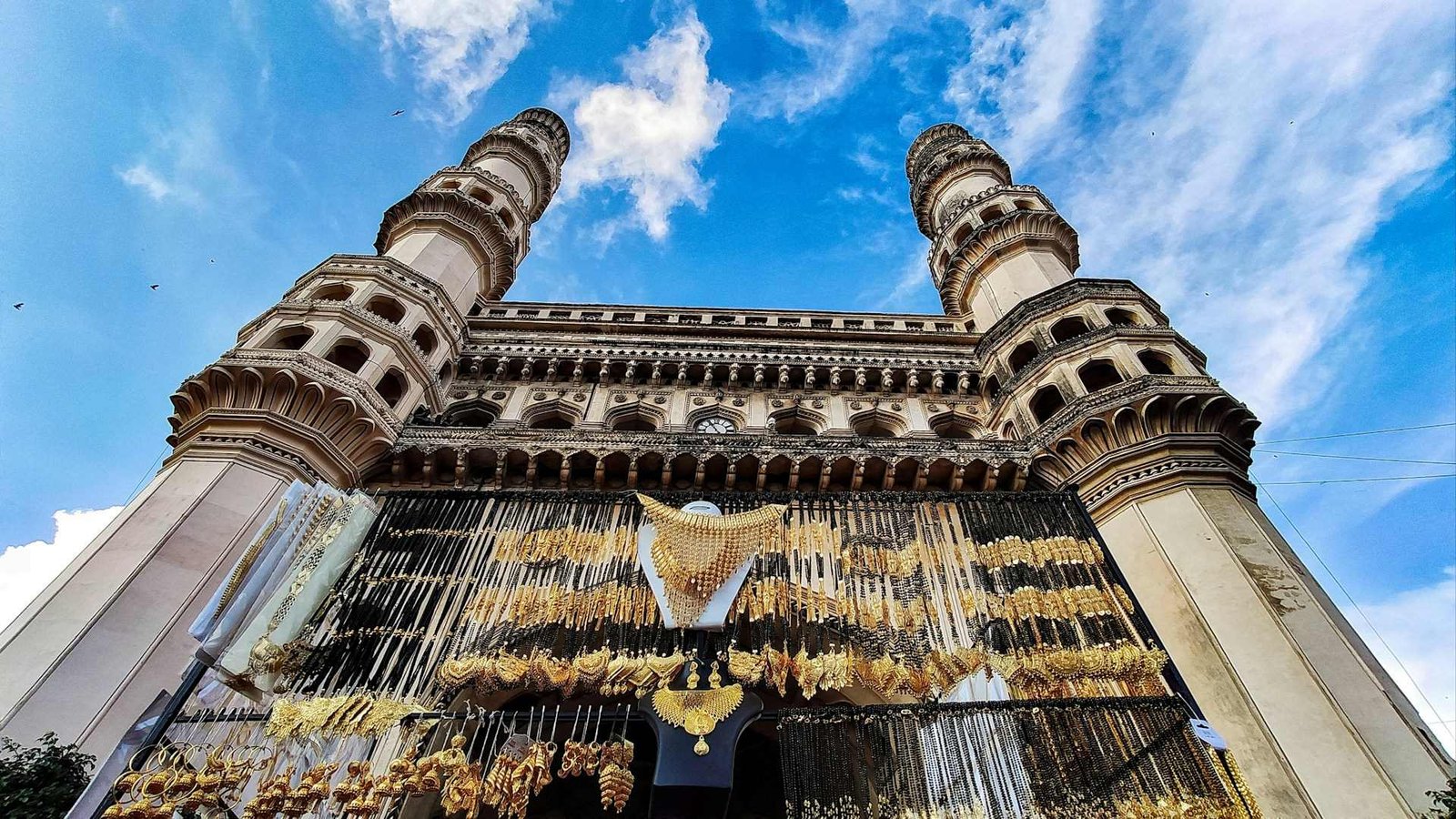
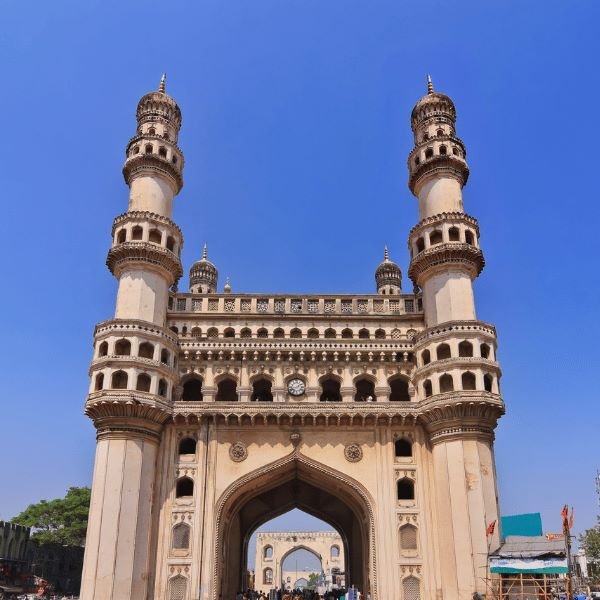
The city of pearls and biryani, Hyderabad is home to one of the most iconic landmarks – the Charminar. Translating to ‘four minarets’, the grand edifice is built entirely out of limestone and granite, with four minarets on four sides, each of them facing a different street. The Charminar stands in a labyrinth of lanes crammed with shops, markets, stalls and shoppers – one of the best places to shop for the authentic pearls and relish the tasty biryanis, skewer kebabs and haleem (the smorgasbord of food that Hyderabad is known for).  

Things to Do

Charminar

An identifying feature of the city, Charminar is the most prominent landmark located right in the heart of Hyderabad. The monument was erected by Quli Qutub Shah to signify the founding of Hyderabad. As is evident from the structure, it was so named as it consists of four minarets. Although it lies right in the centre of the city with traffic and crowds milling all about it, Charminar certainly manages to hold the gaze. It is also famous for the market that sprawls around it and is called ‘Laad’ or ‘Chudi’ Bazaar. Since the construction of the monument in 1591, Charminar has been synonymous with the culture of Hyderabad standing tall as a reminder of the glorious days of the past era. It is a massive structure which has four minarets which many believe stand for the first four ‘khalifas’ (Prophets) of Islam. Towards the north of the monument, there are four gateways known as Char Kaman which have been constructed in the cardinal directions. The structure was intended to serve as a Madrasa or a Mosque. In its present form, Charminar, along with Qutub Shahi Tombs and the Golconda Fort, has been added to the ‘tentative list’ of UNESCO World Heritage Sites.

Ramoji Film city

A place that is perfect for all the lovers of cinema and Bollywood! Set up by Ramoji Rao, the head of Ramoji group in 1991, Ramoji Film City is a spectacular getaway a little outside the city of Hyderabad. It is spread over 2500 acres and has been certified as the World’s largest Film Studio Complex by the Guinness Book of World Records. Ramoji Film City can accommodate 20 film units at one go and has various shooting locations including London Street, Hollywood signage, Japanese gardens, airport, hospital, landscapes and buildings as well as laboratories. Being one of the most popular places to visit in Hyderabad, one can reach Ramoji Film City through a number of packaged tours and buses that leave regularly from the city.

Golconda Fort

Situated in the Western part of the beautiful city of Hyderabad at a distance of approximately 9 km from Hussain Sagar Lake, Golconda Fort is one of the region’s best-preserved monuments. The construction of this fort was completed in the 1600s and it is reputed for being the area where once, the mighty Koh-I-Noor diamond was stored. It is said that if you clap your hands at the bottom of the fort, the echoes of it can be heard right to the top! The architecture, the legends, the history, and the mystery of Golconda Fort add to its allure and make it one of the must-visit places in Hyderabad.

Hussain Sagar Lak

Renowned as Asia’s largest artificial lake, Hussain Sagar Lake is one of the most popular tourist attractions located in Hyderabad. The lake itself was commissioned by Ibrahim Quli Qutub Shah in 1563 and is renowned for its monolith of Lord Buddha that stands right in its centre. Incidentally, this monolith structure is the tallest of its kind in the world! Hussain Sagar lake is also Called Tank Bund and lies on a tributary of River Musi. The attraction also has 3 km long dam wall and connects the twin cities of Hyderabad and Secunderabad. It is bordered by Indira Park, Sanjeevaiah Park, and Lumbini Park on 3 sides and is truly a relaxing and calming getaway from the city.

Warangal

Warangal takes you back to the era of kings and queens with its beautiful historical sites and an impressive natural beauty with Parkhal Lake being worth checking out.The Warangal city is credited as the fifth largest city in this state. The legends have it that it was known as Oruguallu or Omtikonda or Ekasilanagaram mainly due to the existence of a huge hillock which seemed to have been carved out entirely off one stone. Warangal takes you back to the era of kings and queens with its beautiful historical sites. Warangal natural beauty is no less impressive and the Parkhal Lake and wildlife sanctuaries are also definitely worth checking out. Warangal also houses a National Institute of Technology(NIT) which has made it a famous student hub today.

Pakhal Lake

Around 50 km away from Warangal city is the beautiful Pakhal Lake which is spread over an area of 30 sq km. Set amidst the lush green forests and hills, the human-made lake forms a highly picturesque location.The lake also borders a wildlife sanctuary located at its shore. The chirping of birds mingled with rejuvenating breeze and tranquillity makes it a favourite spot for picnics and nature enthusiasts. A man-made lake built during the Kakatiya Dynasty by the King Ganapati Deva in 1213 AD, it was made to serve the farmland activities. The creation of ancient times, even today, is seen performing its duty of providing water for irrigation. Approximately 3 Lakh acres of land is surviving over its waters. Located next to the Pakhal Wildlife Sanctuary, established in the year 1952 by the makers of this lake, the Pakhal Lake also provides natural heaven to the wild animals amongst the range of low hills and a plateau with safe ambience. This is the reason; one even spots a wide range of species of flora and fauna near the lake.

Thousand Pillar Temple

The Thousand Pillar Temple is an ancient temple that is tucked away in a small town named Hanamakonda in the vibrant state of Telangana. As the name suggests, the temple has over one thousand pillars, some of which are a part or extension of adjacent pillars! These pillars are so tightly knit, they practically form the walls of the temple. Constructed in a star-shaped architecture, the Thousand Pillars Temple is a popular pilgrimage centre which welcomes more than 1000 devotees almost every day. The temple also contains a huge monolith Nandi, made up of black basalt stone. The three shrines located in the temple are together known as Trikootalayam. 

Ramappa Temple

The magnificent structure of Ramappa Temple is situated about 77 kilometres away from the main city of Warangal, right in the heart of the ancient capital of the Kakatiya Dynasty. Dedicated to Lord Shiva, the temple is believed to have been constructed over a period of 40 years. It was built by General Recherla Rudra during the period of the Kakatiya ruler Ganapati Deva. The edifice of Ramappa Temple is an exquisite example of Kakatiya style of design and is covered in detailed carvings that depict the life in the olden times. The intricate architecture and mighty foundation has stood the test of time and is a wonderful look into the culture and history of Hyderabad.

Warangal Fort

A prominent landmark of the Telangana state and an apt example of architectural excellence and historical richness of the yore, the Warangal fort is situated in Warangal. The city is also known as Oru Kallu, which means ‘a single stone’. Locals believe the city was built on a single rock in the medieval era. Sprawlingly spread across a stretch of 19 km between Warangal & Hanamkonda, this 12th-century fort is a prominent historical attraction in Telangana. Every year thousands of enthusiastic tourists flock in to witness the historical and architectural marvel of this region.The major highlights of Warangal fort are the four ornamental gates, which are now the official emblem of the Telangana state. The fort is in ruins today, still refelecting the historical grandeur and architectural preeminence of the Kakatiya Dynasty. The ruins hardly resemble any fort as the typical grand walls, cannons, the Darbaar Halls of the rulers are missing. However, what you can witness is the remnants of one of the most invincible fortifications of the medieval era. 

Adilabad

Adilabad is a small town in the state of Telangana that is famous for the beautiful Kunatala waterfalls located amidst lush forests. Originally known as Edulapuram, this place is for the nature lovers and history buffs. Adilabad is currently Telangana’s second-largest district and the town witnesses various customs and traditions that are a fusion of Telugu and Marathi culture.Once being the power of centre of various great dynasties including Mauryas, Chalukyas, Bahmanis and Mughals, Adilabad today is bejewelled with their remarkable relics left behind. Apart from a plethora of temples and mosques, this city is also enriched with flora and fauna covered by a layer of dense forest. Also known as ‘City of Cotton’ owing to the booming trade of the plant.

Kunthala Waterfalls

Regarded as one of the most scenic waterfalls in Telangana, the Kunthala Waterfalls is situated in amid of gorgeous Sahyadri Mountain Range. Kuntala waterfall is the highest waterfall in the state that plunges from a height of 150 feet. The waterfall originates from the Kadam river which is known for its picturesque forests. As per the legend, the waterfall is named after Shakuntala, who was believed to have fallen in love with king Dushyanta, at the very site. Also, it is said that Shakuntala used to take bath in this Kuntala Falls. Since Gond tribes mostly live here, the waterfall’s name is derived from the world ‘Kunta’ which means pond in both Gondi and Tamil. The word ‘Kuntalu’ stands for multiple ponds, and this waterfall is created by the confluence of several ponds which drains from the river.

Pochera Waterfall

Located only 37 kms away from the bustling town of Nirmal, the Pochera Waterfall is the highlight of Telangana. With the white waters powerfully plummeting from the height of a whopping 20 meters, the Pochera Waterfall is the deepest waterfalls of the entire Telangana region.It may surprise you to know that the bed of the Pochera waterfall is entirely made from the purest form of granite. This gives the waterfall a slight emerald tinge, making them all the more tantalizing. You can take a relaxing dip in these falls and splash around with friends and family, or you could sit by the waters staring at the majestic allure of the falls as the hypnotic murmur of the plummeting waters appeases every nerve in your body. 

Mahatma Gandhi Park

Mahatma Gandhi Park is a location where one can relax and unwind by meditating. Bounded by lush green plants and trees, this place is perfect for a break from long tiring routine. A statue of Mahatma Gandhiji has been installed in Mahatma Gandhi Park in the of the park. This beautiful Gandhi Park also has a seperate section for kids installed. 

Jainath Temple

Built in the Jain style of architecture, Jainath Temple is located 21 km from Adilabad in Jainath Village. The temple is renowned for its Prakrit stone inscribed with 20 slokas that suggest that the temple was built under Pallava chief. The temple is visited by a large number of devotees especially between Karthika Sudda Ashtami and Bahula Saptami. Lord Lakshmi Narayana Swami Temple located in the vicinity of this temple is also a major shrine.

Secunderabad

Located presently in the Indian state of Telangana, Secunderabad has been called the “Twin city of Hyderabad”. The city, located on the northern part of the Deccan Plateau, was established in 1806 by the English as a cantonment after they defeated the Asaf Jahi dynasty. While Hyderabad has still retained the influences of the Nizam’s rule in its culture and architecture, Secunderabad has a more English touch to it as it was under the British until 1948.The city of Secunderabad is divided from Hyderabad by the Hussain Sagar lake, but still forms a part of Hyderabad’s Greater Hyderabad Municipal Corporation (GHMC). One of the largest cantonments in India, Secunderabad enjoys a significant presence of an army as well as airforce personnel. As a cosmopolitan city, it is home to many communities apart from the natives, including many Parsis and Anglo-Indians

Secunderabad clock tower

The Secunderabad clock tower serves as one of the fascinating tourist spots in the twin cities of Hyderabad and Secunderabad owing to its rich historical past. The 120 ft clock tower is built on an area of 2.5 acres and was inaugurated during British rule. The clock tower is centrally located at Shivaji Nagar in Secunderabad. Owing to its heritage and aestheticism, it plays a vital role in Secunderabad’s tourism. This clock tower which had stopped chiming for a while had come to a standstill situation which was renovated recently, not letting down the tourists. Thus, the clock tower of Secunderabad has managed to serve the people during colonialism as well as the tourists now, and it seems it has promised to do so for more years to come.

Paigah Palace

The Paigah palace situated in Secunderabad, Telangana is an embodiment of Indo-European culture. Sir Vicar-ul-Umra built the exquisite palace in 1900 as a gift for the sixth Nizam of Hyderabad Mir Mahbub Ali Khan. ‘Paigah’ was a title which meant grandeur and high rank. This title was given to nobles who were second to the nizams bounded by matrimony. Paigah palace showcases pure European architecture as the Nizams had a lot of excursions in Europe. The palace sits on four-acre land exhibiting European architecture. It is a neo-classical building having spectacular opulence Paigah palace hosts various ceremonies like weddings, engagements, religious ceremonies, birthday parties and much more. Visiting the Paigah palace gives you an opportunity to witness beautiful craftsmanship of Indian workers blending with European culture and a story or two to pass on.

All Saints Church

Located in Trimulgherry in Secunderabad, the All Saints Church falls under the denomination of Church of South India, which was previously regarded as Anglican. The church is known to be dedicated to All Saints. It falls under the administration of the Diocese of Medak. Legend has it that before the church was entrusted to the Church of South India in the year 1947, it was a Garrison Church and the Army Chaplains presided it. The church now serves the Tamil Anglican congregation in Secunderabad. The church is known for its grand celebration of Christmas and people from all over the city come to celebrate. It is also known for its celebration of other occasions like Good Friday, Palm Sunday and Easter. Special prayers are conducted on these days, and various types of functions are held. The church is surrounded by beautiful gardens with greenery all around you. You can take a walk through the pleasant and peaceful nature with your family and your loved ones and calm your mind. It will definitely make your day.

Peddamma temple

The Peddamma temple is one of the oldest temples in Secunderabad dedicated to Goddess Lakshmi in an extraordinary posture and has been a very sacred place for the Hindus for more than 150 years. The word peddamma is derived from two independent words- ‘peda’ and ‘amma’ both meaning mothers. Thus the etymological meaning of the temple refers to the ‘mother of all mothers’, which is God. Apart from its religious sentiments, this temple has also been a constant tourist attraction because of its beautiful architecture and surroundings.